
EDUCATIONAL POST
WHAT IS ABORTION:
Abortion is the deliberate termination of a human pregnancy, most often performed during the first 28 weeks of pregnancy.
OVERVIEW:
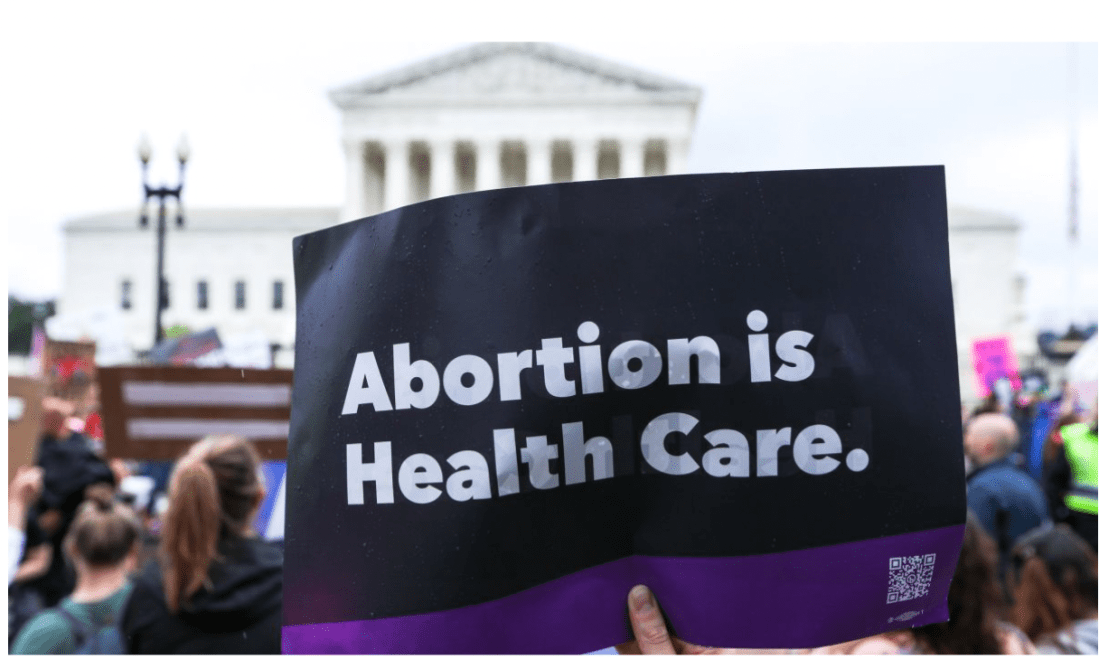
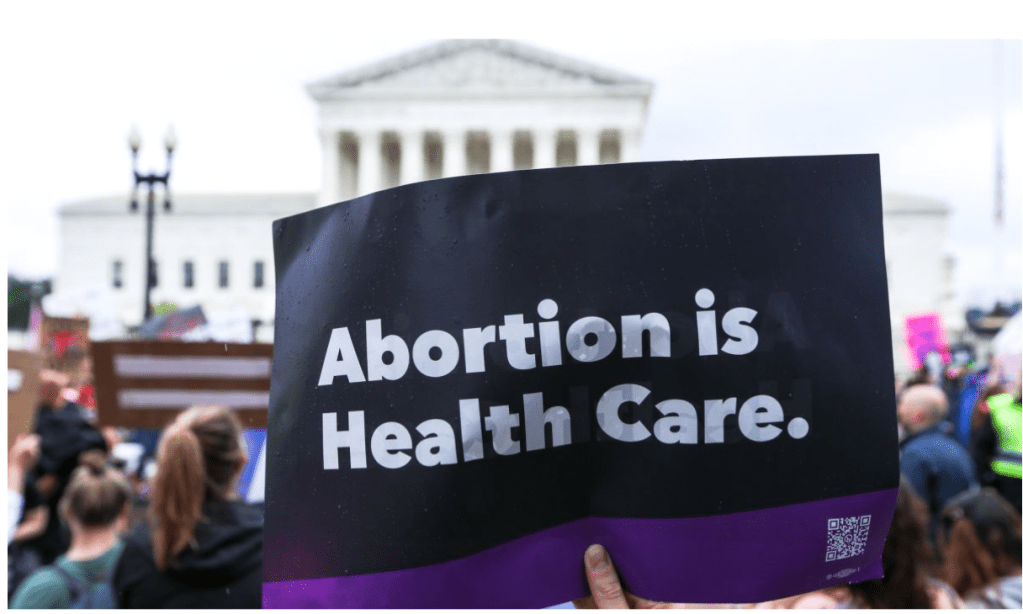
On 24th June, the US SUPREME COURT overturned ROE V WADE issuing a ruling that upholds a Mississippi law banning most abortions after 15 weeks of pregnancy, and striking down constitutional protections for abortion acre.
The decision, leaked in early May, meant that abortion rights would be rolled back in nearly half of the states immediately, with more restrictions likely to follow. This will mean that abortion will not be available in large parts of the country, for all practical purposes.
This decision as well as the abortion question itself will most likely be a focal point in the upcoming fall elections and in the fall and thereafter.
The ones who made the decision were Justice Clarence Thomas, Justice Neil Gorsuch, Brett Kavanaugh, and Amy Coney Barrett.
The ones who dissented from the decision were Justices Stephen Breyer, Justice Sonia Sotomayor and Elena Kagan. They said that this court decision meant that “young women today will come of age with fewer rights than their mothers and grandmothers.”
It means that “from the very moment of fertilisation, a woman has no rights to speak of. A state can force her to bring a pregnancy to term even at the steepest personal and familial costs.”
They wrote, “ With sorrow,- for this court, but more, for the many millions of American women who have today, lost a fundamental constitutional protection – we dissent.”
HISTORY BEHIND THE THE ROE V WADE LAWSUIT
The ROE V WADE lawsuit formed in 1973 famously led to the Supreme Court, making a ruling on abortion rights. Jane Roe*, an unmarried pregnant woman, filed suit on behalf of herself and others to challenge Texas abortion laws. A Texas doctor joined Roe’s lawsuit, arguing that the state’s abortion laws were too vague for doctors to follow. He had been previously arrested for violating the statute.
At the time, abortion was illegal in Texas unless it was done to save the mother’s life. It was a crime to get an abortion or to attempt one. In ROE V WADE, the Supreme Court decided two important things:
- The United States Constitution provides a fundamental “right to privacy” that protects a person’s right to choose whether to have an abortion.
- But the abortion right is not absolute. It must be balanced against the government’s interests in protecting the health and prenatal life.
LEGAL ARGUMENTS:
Down below are each side’s arguments before the Supreme Court
Texas Defends Abortion Restrictions:
– States have an interest in safeguarding the health, maintaining health standards and protecting prenatal life
– A fetus is a “person” protected by the 14th Amendment
– Protecting prenatal life from the time of conception is a compelling state interest
Roe Claims Absolute Privacy Rights:
– The Texas law invaded an individual’s right to “liberty” under the 14th Amendment
– The Texas law infringed on rights to marital, familial, and sexual privacy guaranteed by the Bill Of Rights
– The right to an abortion is absolute – a person is entitled to end a pregnancy at any time, for any reason, in any way they choose
HOW THE SUPREME COURT DECIDED ROE VS WADE:
– It split the difference between the two arguments being made
– First, the Court recognised that abortion does fall under privacy rights
– The constitutional right to privacy comes from the Due Process Clause of the Fourteenth Amendment.
-> The Due Process Clause doesn’t explicitly state that Americans have a right to privacy. However, the Supreme Court has recognised such a right going all the way back to 1891.
– Just 1 year before Roe, the Supreme Court held that “in a Constitution for a free people, there can be no doubt that the meaning of liberty must be broad indeed.”
– The Court decided that this right to privacy extends to control over pregnancy
The justices acknowledged that being forced to continue a pregnancy puts a lot at risk such as :
– Physical health
– Mental health
– Financial burdens
– Social stigma
The Court was sceptical of the state’s argument that Constitutional protections begin at conception.
The Constitution doesn’t provide a definition of a “person”. But it does say that its protections cover those “born or naturalised” in the United States. After examining other cases relating to unborn children, the Court concluded that “the unborn have never been recognised in the law as persons in the whole sense.”
The Court did not agree that the Constitution guarantees an absolute right to an abortion. In other words, privacy rights do not prevent states from putting some regulations on abortion.
The Court created a framework to balance the state’s interests with privacy rights. The Court defined the rights of each party by dividing pregnancy into three 12-week trimesters:
- During a pregnant person’s first trimester, the Court held, a state cannot regulate abortion, beyond requiring that the procedure be performed by a licensed doctor in medically safe conditions.
- During the second trimester, the Court held that a state may regulate abortion if the regulations are reasonably related to the health of the pregnant person.
- During the third trimester of pregnancy, the state’s interest in protecting potential human life outweighs the right to privacy. As a result, the state may prohibit abortions unless an abortion is necessary to save the life or health of the pregnant person.
IMPACTS:
Many think of ROE V WADE as the case that “legalised abortion”. However, that isn’t actually true. What it did was change the way states can regulate abortion, and characterised abortion as something that was covered under constitutional rights of privacy.
It may come as a surprise that Roe didn’t have much of an impact on the number of abortions performed each year in the United States. According to the Guttmacher Insitute, in the years before Roe was decided there were over 1 million illegal abortions performed in the US annually. After Roe, the number remained around 1 million, performed legally. Plus, the rate of deaths resulting from abortions dropped dramatically in the years following Roe.
There wasn’t much public reaction to Roe when the Supreme Court first released its decision. However, in the decades that followed, it became a significant issue in American politics and more so now today.
As Justice Harry Blackmun ( who wrote the decision in Roe) points out, abortion will never be a simple issue. It remains a hotly debated topic because someone’s opinion on it depends on their view of the world, and when they believe life begins.
WHAT WE CAN DO:
Here are 7 things you can do today to help people seeking care:
- Donate to abortion funds
- These directly support people seeking abortion care including financial and practical support like transportation, lodging and language translation and are a critical part of ensuring abortion access
- Donate to independent abortion clinics at Keep Our Clinics
- Small, community-based clinics provide the majority of abortion care in the U.S. and are more likely to be located in states hostile to abortion rights. When clinics close, entire communities lose access to abortion and other essential reproductive and sexual health services
- Show up and protest
- Attend a rally or event near you – make your voice heard. Events supporting abortion access are continuing across the U.S. – visit the We Won’t Go Back map and find one near you.
- Speak up and activate your network. Speak to your friends, family, business colleagues, professional associates, community leaders – and anyone else you can think of – and tell them why the right to abortion is so essential to a person’s life and future. Activate your networks by creating your own message or sharing some sample #AbortionIsEssential posts.
- Learn more about abortion laws in your state. Click through the interactive “What if Roe Fell?” tool to learn about the laws in your state and all other states – and which states protect abortion, and which are likely to ban it.
- Find out where your lawmakers stand on abortion rights. Do you know where your local, state, and federal legislators stand on abortion rights? Call or email them to find out – and urge them to act now to protect abortion rights and access in law.
- Tell Congress to protect abortion access by passing the Women’s Health Protection Act (WHPA). Congress can and should act immediately to protect the right to access abortion in every state. WHPA should protect abortion access from state-level abortion bans and restrictions, despite the Supreme Court’s ruling overturning Roe.
*an alias
LINKS TO THE WEBSITES BROUGHT TOGETHER IN THIS BLOG POST:
https://www.npr.org/2022/06/24/1102305878/supreme-court-abortion-roe-v-wade-decision-overturn
 Thebookaholic